Tuesday, September 15, 2015

Traditional Literature

There Was An Old Lady Who Swallowed A Fly


Image from http://images.amazon.com/images/P/0670869392.jpg


Bibliography:
Taback, Simms. 1997. There Was An Old Lady Who Swallowed A Fly. New York, NY: The Penguin Group.ISBN 9780670869398

Plot Summary:

There Was An Old Lady Who Swallowed A Fly tells of the demise of our main character, the old lady, by her repeated attempts to resolve a problem, each time only making the situation worse. Her initial problem is that she swallows a fly and in order to get rid of it, she swallows a spider. However, now her problem is that she has swallowed a spider, so she resolves that by swallowing a bird. After that, she swallowed a cat to eat the bird. Next, she swallowed a dog to get the cat, and then a cow to get the dog. Finaly, she swallowed a horse to get the cow...and what happened?  Well, she died, of course!

Critical Analysis:

This imaginary story of an old lady contains traditional folktale elements such as rhyme, simple humor, and repetition. Taback Simms expertly brings the imaginary story, There Was An Old Lady Who Swallowed A Fly, to life through his detailed illustrations of this cumulative folktale. Simms creatively shares this taleadding humor and a twist through fun, colorful illustrations. Although the plot is simple and episodic, the illustrations are anything but simple and provide for new discovery opportunities with repeated reads. Die-cut holes, for example, reveal each insect or animal that the old lady has swallowed! A clue to the next animal that will be in the Old Lady's stomach is given to those who are looking closely! On page 16 of the book, for example, down at the bottom, a picture of a dog sticking out it's tongue is saying, "I hope it's a lie." In addition, Simms extended the traditional folk tale element of rhyme through character interactions by adding on more rhymes through collage technique. For example, the text reads, "I don't know why she swallowed a fly." and a cow can be seen saying, "I think I'll cry." Such dialogue between the animals and the speaker add another layer of interest and humor. Children will easily pick up on the the pattern of the text and laugh at the creative illustrations of the old woman growing larger and larger with the turn of each page. A beautiful picture book by Simms, this will be loved by both children and adults!

Review Excerpt(s):
 "Those accustomed to the streamlined version of this ditty won't know what to make of the comments scattered throughout the pages, little asides quipped by animals not yet swallowed; these rhyme with the ``perhaps she'll die'' line of the poem. Fortunately, these additions can be easily ignored or inflated according to taste, and full concentration given to the poem itself and the wild, eye-catching artwork: It is good fun to watch the old lady bulge and bloat, and the sheer corniness of the verse continues to be deeply gratifying." (Picture book. 4-8) ~Kirkus Review
“There are so, so many details to make you laugh in this glorious patchwork of riotous colour.”~The Bookbag


Connections:
Read similar books to There Was An Old Lady Who Swallowed a Fly
~There Once Was a Cowpoke Who Swallowed an Ant by Helen Ketteman
~I Know an Old Teacher by Anne Bowen, illustrated by Stephen Gammell
~I Know an Old Lady Who Swallowed a Pie by Alison Jackson, illustrated by Judith Byron Schachner

Read other books by Simms Taback:
~Joseph Had a Little Overcoat
~Postcards From Camp
~This Is the House That Jack Built

Awards & Recognitions:
~1998 Caldecott Honor

~1998 ALA Notable Children's Book


The Three Horrid Little Pigs


Image from http://ecx.images-amazon.com/images/I/51puhKONdRL._SX258_BO1,204,203,200_.jpg


Bibliography:
Pichon, Liz. 2008. The Three Horrid Little Pigs. Wilton, CT: Little Tiger Press. ISBN 978-1-58925-077-2

Plot Summary:
The tale of The Three Little Pigs takes a twist when it is fractured by Liz Pichon.  The tale of The Three Horrid Little Pigs tells of three little pigs that are just that, three little horrid pigs! They live with their mother in a tiny house and they finally drive her crazy, so much so,  that she tells them to move out!  The little pigs pack their things and venture out.  The first little pig does, indeed, try to build his house out of straw.  The second, also tries to build a house, however, he tries to build his house out of twigs.  Our villain, the handyman wolf, is kind enough to offer to build the lazy pigs homes. Well, the pigs, naturally, refuse his help, by the “hairs of their chinny chin chins” and away goes the wolf. Now the third pig, lazily, decides that he won’t need to build a house at all, he will simply move into the chicken coup! The handyman wolf offers the lazy pigs to come and live with him in his nice big brick house. After the first pig’s house is destroyed by a cow, the second pig’s house is overrun by birds, and the third little pig is bothered by the rooster, the pig’s decide to head to the wolf’s house, sneaking down the chimney and finding a boiling pot of water in the fireplace. Come to find out, that handyman wolf was only making soup for them to share.  So, the three horrid little pigs and the handyman wolf have a lovely dinner, together. The pigs stay for a while, learning the craft of house building, and also a bit about behaving! In the end, all of the animals end up living happily ever after in one big, strong house.


Critical Analysis:
The traditional beast tale, The Three Little Pigs, has been creativley altered by Liz Pichon into a picture book suitable for young children.  It contains elements of beast tales, as the pigs and wolf act and talk like humans. The Three Horrid Little Pigs, is a fractured fairy tale because the author has altered and modernized the characters and the language of the traditional, well-known tale. The characters in this tale follow the typical archetypes of good or evil.  However, the roles in this familiar fairy tale are fractured from the tradiational tale, reversing the villain, as the wolf, with the three little pigs, making them the “bad” characters and the wolf the “kind, generous,” character. A few things remain the same, the significant number of three is maintained from the European story, the tale is set in the countryside, and the overriding theme of “hard work is rewarded” remains from the original tale.  A few additional lessons are explored, however, in this version, those of kindness and helping each other. The wolf as the kind one, teaches his friends how to build a strong home, and how to behave a bit better!


The illustrations add to the humerous, energetic feel of the text, as they are bright, bold, and like this retelling, modern and refreshing.  Readers are able to step into the text, as they closely examine the illustrations, the mean eyes of the pigs that makes them look grumpy and bad, or reading the thoughts of the wolf, as he reacts to the pigs’ rude behavior saying, “Oh dear” and “Goodness me!” The author's illustrations, in short, add to the story by deepening our understanding of the character traits, both good and evil, yet appeal to children through the use of bold, colorful illustrations. This text will be requested as a repeated read aloud just to examine, more closely, the characters’ thoughts and feelings detailed in the illustrations.


Review Excerpt(s):
"This fractured take on the Three Little Pigs is infused with humor and lessons about community and compassion."
~Booklist Review

"The full-color cartoon illustrations capture the pigs’ bad behavior and comeuppance with a goofy exuberance. The font size shrinks and enlarges to mirror the action and the text works as a fun read-aloud as well as a read-alone.”
~School Library Journal


Connections:
~Read other books illustrated by Liz Pichon:
The Three Billy Goats Gruff By Rachael Mortimer 
The Very Ugly Bug by Liz Pichon 
Penguins by Liz Pichon 
Beautiful Bananas By Elizabeth Laird and Liz Pichon 

-Write your own fractured version of the tale
-Adapt and perform a reader’s theatre
-Compare this fractured version with the traditional European antecedent and compare the differences


Awards & Recognitions:

~1998 Caldecott Honor


Bearhead


Image from http://www.scholastic.com/content5/media/products/27/9780823413027_xlg.jpg


Bibliography:
Kimmel, Eric A. 1991. Bearhead. Ill by Charles Mikolaycak. New York: Holiday House. ISBN 978-0-329-63172-7

Plot Summary: 
Bearhead is a retelling of a Russian fairy tale by Eric Kimmel. Bearhead is a man, with the head of a bear, taken in by kindly peasants when he was an infant. Bearhead becomes a devoted and obedient son, always doing exactly as he is told. The evil Madame Hexba demands that Bearheads father be her servant, Bearhead volunteers to take the job, himself. The evil Madame Hexba discovers that Bearhead follows orders literally, much to her surprise, as he literally follows orders and throws the table out the window when asked to clear the dinner table. Hexba becomes desperate to have Bearhead out of her home, so she sends him on a deadly mission: he is to retrieve the long over due rent from the goblin who lives in the lake. Bearhead is able to outwit the goblin and return home with the goblin’s hat and treasure for his family!

Critical Analysis:
Bearhead is a picture book that portrays characters who follow typical archetypes of good or evil. However, unlike the traditional tale from Russia, Kimmel has adapted from the oral tale, Ivanko, the hero with the head of a man and the body of a bear. Unlike Ivanko, Bearhead has the body of a man and the head of a bear. An element of traditional tales that is maintained in Kimmel's book, the plot maintains the conflict as a quest or journey of Bearhead to outwit the evil character Hexba and return home. The reader is drawn to Bearhead as he follows directions in a childlike manner with a literal interpretation, throwing the table out of the window, for example, when asked to clear the dinner table. The ending to this tale is satisfying, and contains many attributes of a traditional tale, such as repetition of a problem, and good triumphing over evil. The illustrations of watercolor and colored pencil beautifully complement and extend the story, providing details not mentioned in the text. The reader is able to linger over the detailed illustrations, as the layout of the text is set apart from the illustrations. Bearhead is a tale that will make children smile as they listen and also as they explore the details of the parent culture, old-world Russian, illustrations.


Review Excerpt(s):
"A satisfying story in a handsome setting. (Picture book. 4-10)."
~Kirkus Reviews

“Still, this is a satisfying tale, and children will delight in the winning hero's literal interpretations of orders. Ages 5-8.” 
~Publisher’s weekly

Connections:
~Read other books by Eric Kimmel:
Anansi and the Moss-covered Rock by Eric Kimmel and Janet Stevens  
The Three Little Tamales by Eric A. Kimmel and Valeria Docampo 
A Cloak For the Moon by Eric A. Kimmel,
      Retold by Katya Krenina, Illustrator, Eric A. Kimmel, Author
Robin Hook, Pirate Hunter! Eric A. Kimmel, Author, Michael Dooling, Illustrator


Wednesday, September 2, 2015


The Poky Little Puppy


Image from http://www.spazeup.com


Bibliography: 

Lowrey, Janette Sebring. 1942. THE POKEY LITTLE PUPPY. Ill. Gustaf Tenggren. New York: Random House. ISBN 9780375841385


Plot Summary:
The story of The Poky Little Puppy tells of five adventurous sibling puppies who are determined to see the wide, wide, world outside of their fence. As the four puppies reach the top of a hill, they discover that one poky puppy is not with them.  They begin to look for him and find that the poky puppy has poked around and discovered a smell, rice pudding! The four pups all race home, eager to devour the delicious rice pudding, only to find that their mom has discovered the hole under the fence.  The pups are punished, sent to bed without any rice pudding. Later, the poky puppy comes home, after the others are in bed. The poky pup is rewarded for his pokiness, as he, alone, devours the delightful dessert that his siblings did not get to eat. The next day, the naughty pups, again, dig out to see the world. This time the smell of yummy rice pudding brings the puppies running home, again, without the poky puppy, who has been distracted. Later, when the poky puppy returns he is, again, rewarded for poking around and coming in late. He eats the creamy chocolate custard left untouched by his siblings. The third day the pups discover a sign that mom placed by the fence, "Don't ever ever dig holes under this fence!" And still, the pups dig out. For a third time, the poky puppy falls behind, this time smelling sweet strawberry shortcake. The brothers go racing home and, for a third time, are punished for digging out.  This time, however, the pups wait until mom has gone to sleep and refill the hole. When mom wakes to discover what the pups have done, she rewards them with the strawberry shortcake. This time, when the poky pup sneaks in after bedtime, he finds himself outwitted by his brothers.  He goes off to bed feeling sorry for himself.


Critical Analysis:
Lowrey paints a picture of relatable characters through the use of personification.  The pups exhibit characteristics of humans by speaking, reading and even participating in deviant behaviors, such as breaking their mother’s rules.
The illustrations are beautifully done, aiding in pushing the plot forward, as they are located in just the right places under paragraphs. The illustrations reveal the pups’ energy, and focus the reader, as the pictures are cropped in haloed shapes.
Emergent readers, who might be eager to explore their own world, will easily relate to the inquisitive pups. The repetitive text allows for the learning of words and phrases, as well as counting.
Although the book was written in 1942, it remains a timeless classic.  The lesson it presents is clear and the characters loveable. Grandparents, parents and children will love this memorable story for generations to come!


Review Excerpt(s):
  • This classic story of naughty puppies and their backyard adventures—complete with fuzzy caterpillars, musical flowers, crickets and frogs and all topped off with dessert—is sure to be a favorite yet again. (iPad storybook app. 2-6)            Kirkus Review
  • This classic  “First published in 1942, The Poky Little Puppy by Janette Sebring Lowrey, illus. by Gustaf Tenggren, stars a curious canine who just can't keep up with the pack.” –Publisher’s Weekly

Connections:
~This is a great book to teach about consequences and also cause and effect.
~This is a great book to teach about sequence of events.
~Other books that would be great to teach about consequences and cause and effect:
1.    Three Little Kittens
2.    The Little Red Hen


Dooby Dooby Moo


Image from http://ecx.images-amazon.com/images/I/71Wj3dyU7KL.jpg


Bibliography: 

Cronin, Doreen. 2006. Ill. by Betsy Lewin. New York: Atheneum Books for Young Readers. ISBN: 9780689845079

Summary:
Farmer Brown knows that his animals require him to keep a close eye on their every move and they do not disappoint in Cronin’s book, a sequel to Click, Clack, Moo, Dooby Dooby Moo. As Farmer Brown opens up his newspaper and discovers a portion of the paper missing, he knows that they are, in deed, up to something! Duck has removed a portion of the paper that announces a talent show, boasting the first place reward, a trampoline. As the animals sneak in practice for the talent show, Farmer Brown remains unaware of what they are up to, but watchful! The day comes when the animals are loaded up for the fair and have their chance in the contest.  Will they take first place and win the trampoline?  Will Farmer Brown finally discover what his animals have been up to? Laugh along as you read to find out!

Critical Analysis:
The story is laugh out loud, and the pictures complement the story, creating humor and tension as the reader wonders if the animals’ antics will be discovered by Farmer Brown. Cronin’s and Lewins’ style through onomatopoeia, such as “Dooby, dooby, moo…the cows snore.” and use of large text font and placement are undeniably theirs, and add to the story’s humor. The illustrations add crucial details, which add to the story, such as seeing Farmer Brown face as he watches in disguise.

Review Excerpt(s):

·      “Great fun. (Picture book. 3-7)
~Kirkus Review

·      “Fans will hope for many more to come from this dynamic duo. Ages 3-7).
~Publisher’s Weekly


Connections:

~Enjoy other titles by Cronin and Lewin:
Click, Clack, Moo: Cows That Type
Giggle, Giggle, Quack
Duck For President

-Use with older children as a mentor text for literary language (onomatopoeia).
-Use with students who are strengthening their fluency skills as a Reader’s Theatre text.


The Adventures of Beekle: The Unimaginary Friend


Imagefrom http://www.hachettebookgroup.com/_b2c/media/cache/76/88/7688b94a8d586e714b5d25ac20183616.jpg

Bibliography: 

Santat, Dan. 2014. Ill. by Dan Santat. New York: Little, Brown and Company. ISBN: 9780316199988

Summary:
On an island far, far, away, an imaginary friend is created.  He joins others who wait patiently for a child to imagine them.  Well, not all of them wait patiently.  One creature watches, time after time, as others leave the island.  He decides that he will wait no longer and sets off for the real world, in search of his friend.

Critical Analysis:
The character, finally earning his name, Beekle, has a strong sense of self and a unique way of seeing the world.  He is determined and brave as he travels through places that he fins strange in the real world. Beekle sees this real world as strange because it is from a child’s imaginative perspective, such as no children eating cake and everyone needing naptime.

The illustrations complement the story and are appropriate in their mood. Times when Beekle is facing scary things, the illustrations are dark and playful settings are bright and colorful. The perspective of Beekle, small amongst the feet and legs of Adults without heads showing, illustrate what the world looks like and feels like to someone that small.  Such a perspective would match a young child hearing this story and be automatically relatable.  

Review Excerpt(s):

·      “We should all be grateful that Santat, with his brilliant use of color and humor, was here to bring Beekle to life.”
~The Huffington Post

·      “A terrific addition to any library."
~School Library Journal 


Connections:

~Other books by this author:
Sidekicks
The Three Ninja Pigs
~Other books with imaginary friends:
·      Jessica by Kevin Henkes
·      Emma Kate by Patricia Polacco
·      Dotty by Erica Perl


Awards & Recognitions:
~2015 Caldecott Medal


Wednesday, August 26, 2015

Welcome back! It's Back to School Time!

Welcome Back!

It is August, time to get back into the routine of a new school year.  
This semester I am holding on to my reading by blogging about the books I will be reading in a graduate course at TWU, 
Literature for Children and Young Adults.
  
I was given the assignment of posting reviews of books that I read. 

I hope that you enjoy the reviews!

Wednesday, December 18, 2013

                                      IMWAYR


 "It's Monday!  What Are You Reading? is a meme started by Book Journeys. The folks over at Teach Mentor Texts and Unleashing Readers have given it a children’s/YA spin.
I thought it would be a fun way to recap the week’s reading...

December 18, 2013
This is the last week before the holidays and we have been reading up a Winter Storm! 
Here are my beloved oldies but goodies:


I adore An Orange for Frankie by Patricia Polacco and so do my students! Every year, the family clan prepare for Christmas and await fathers return from faraway Florida with the Christmas oranges.  This year the weather may prevent father from returning with the oranges, or worse, it may prevent father from returning...


'Twas The Night Before Christmas...who can't help but smile when they read these words?  Jan Brett's The Night Before Christmas is a beautiful version of a Christmas favorite!


My husband was the first to share this story with me.  It has been more than twenty years now and Cranberry Christmas by 

Wende Devlin is a solid staple  for us at Christmas!


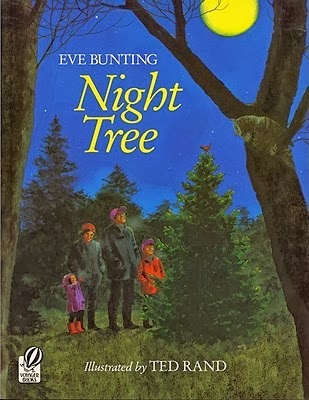
Eve Bunting's Night Tree is a beautifully written story about their tradition of decorating their favorite tree.  However, this tree is not lit up in the family's home.  This tree is decorated with popcorn, apples and tangerines as a gift for the animals.  A wonderful tradition!


Great Joy by Kate DiCamillo illustrated by Bagram Ibatouline
Readers cannot help but fall into the spectacular illustrations of Great Joy and the depth of the story.  Frances, the main character tell us...
                                "Behold!" she shouted. 
                         "I bring you tidings of Great Joy!"

and indeed, she did.


                                                                    Happy Holidays
                                                                                    and 
                         Happy Reading! from BooksNhand

Friday, December 13, 2013

Genres...It's What You Expect! Part 1


Genres...It's What You Expect!

Genres are containers for thinking.  They help us to orient ourselves to the kind of story we are hearing and its purpose. ~Pam Allyn


Some students struggle to "hold on" to the text.  Fountas and Pinnell remind us that memory is one of ten reasons that students struggle. (These)..."Reading difficulties are revealed when the instruction children receive is not appropriate to their experience." (p. 32 When Readers Struggle).  So, it is our job to provide these experiences.  Like a missing block in a building that cannot stand, an understanding of the genres is built upon itself.  When students build a basic understanding of the genres, a structure is in place for them to sort and sift information. If the students have an understanding that there is an organizational structure to the text before they read, they will be able to place the important information into the structure that they expect from that genre.  For instance, if I know that a fictional text will always have characters, setting and plot, then I know what kind of information to hold onto as I am reading.
Students have heard about fiction and nonfiction since their earliest school days. I wonder, how well have we shared with them why we talk about genres?  That there are reasons we identify books within genres.  

"What can you expect from this genre?
This question is a building block to comprehension.  It allows students to set up an organizational structure in their mind for the information they will be processing.  It begins with the largest areas:  Fiction and Nonfiction.  

What can you expect from Fiction?  
1.Is usually a narrative 
2.Includes these elements:  setting, characters, problem or conflict, a plot with episodes, problem resolution and a conclustion.  
3.Is Realistic or Fantasy  
4.The main purpose is to entertain


What can you expect from Nonfiction?
It is Informational
Either Narrative (Biographical or Narrative Fiction) 
or 
Non-Narrative (Expository, Procedural or Persuasive)

So, we need to make sure that our students know what they can expect from each genre by asking them just that...What can you expect from this genre?
Stay tuned for more information to come about what to expect from different forms of these genres!
Happy Reading!
Sheila Richburg
BooksNhand

Friday, December 6, 2013

Language Matters...Prompting for deeper comprehension.

"Tell me what happened in your story that you read last night."   
I heard...crickets.  
Hmmm, okay, I'll try asking in a different way... 
 "Turn and tell your neighbor your thinking about your story."  
Again...crickets and now leaves hitting the ground could be heard. 
I had to do something and fast.

Last night my students finished reading Stay Away From Simon by Carol Carrick.  It is a memorable historical fiction text, set in the 1800's.  The reader walks away from the text having learned a bit more about themselves and the world around them as they enter the world of Lucy and her brother Josiah.  Having preconceived notions and spreading gossip  are challenged as more is learned by Lucy, the main character, about the character Simon.  I knew that my students had a great deal to say about this story, I just had to find a way to start the discussion.  Had I really trained my students to just wait, and eventually, I would jump in and answer my own question(s)?  A flood of research washed into my head, and I heard that  little voice remind me that the one doing the talking is the one deepening their comprehension. Uhh-oh.

I knew that I had a problem and needed to find a way to prompt and then get out of the way.  So, I grabbed my Fountas & Pinnell Prompting Guide Part 2 for Comprehension and searched for a magic phrase that would open up the conversation.  I flipped to the Book Discussion section and furiously scanned the page with the heading, "Ask for Thinking".
Bingo...Then I asked, 
"What surprised you?".  
That did it, the words began to fly out of my students' mouths.

Does language matter?  Absolutely!  


Quick Reference Prompts
Yellow-within, Green-beyond, Blue-about